
Originally written Dec. 2018 for Reporting with Data at UT Austin
As a volunteer walked potential adopters around the Austin Animal Center, small dogs pawed at the glass and cats meowed to grab their attention, but one cat captivated the couple more so than other intakes. Zedo, a male, black & white animal surrender taken in just a day before on Nov. 11, weighed in at 31.7 pounds, highly resembling a Pillow Pet.
“I keep saying we need to sign him up for the Dallas Cowboys front line,” the volunteer said. “He’s really friendly though.”
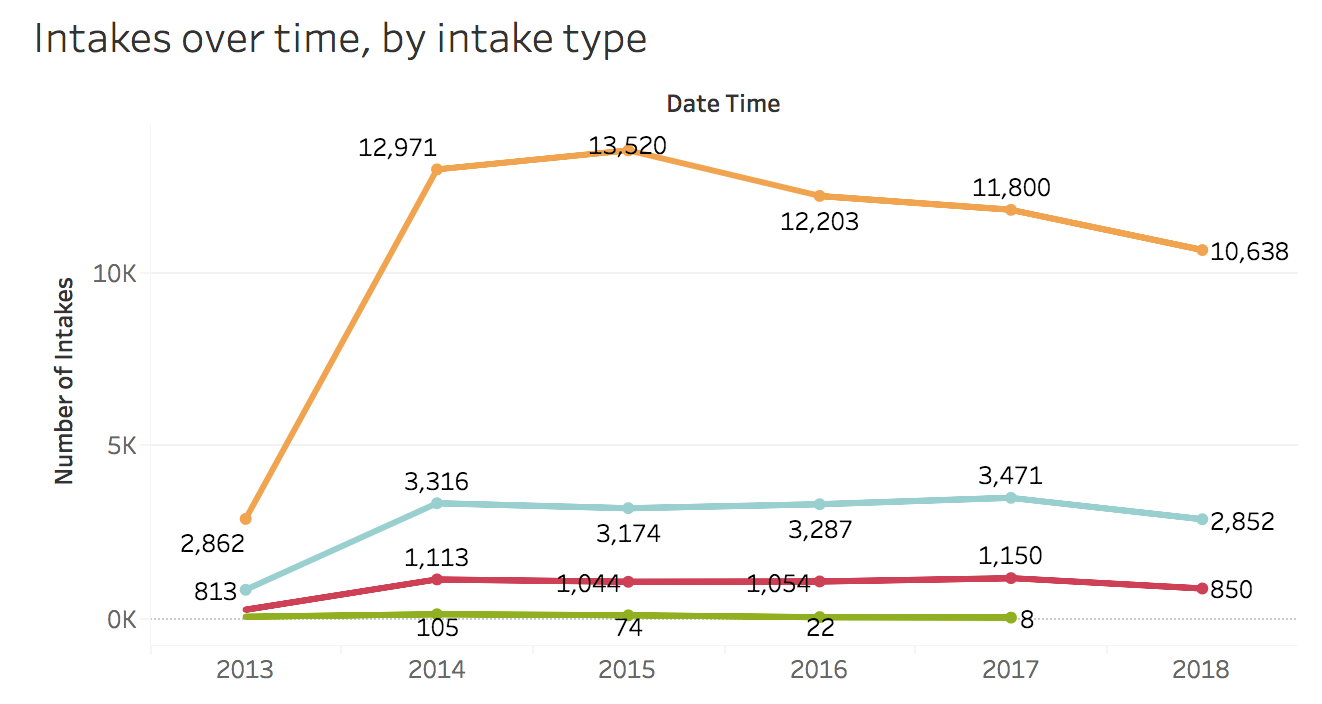
Zedo, although unique in size, is just one of the more than 500 available dogs and cats at AAC every day. Strays overwhelming account for the majority of pet intakes, as compared to owner surrenders or public assists. Back in 2014, over 17,000 companion animals were taken into AAC and not much seemed to change for the next three years.
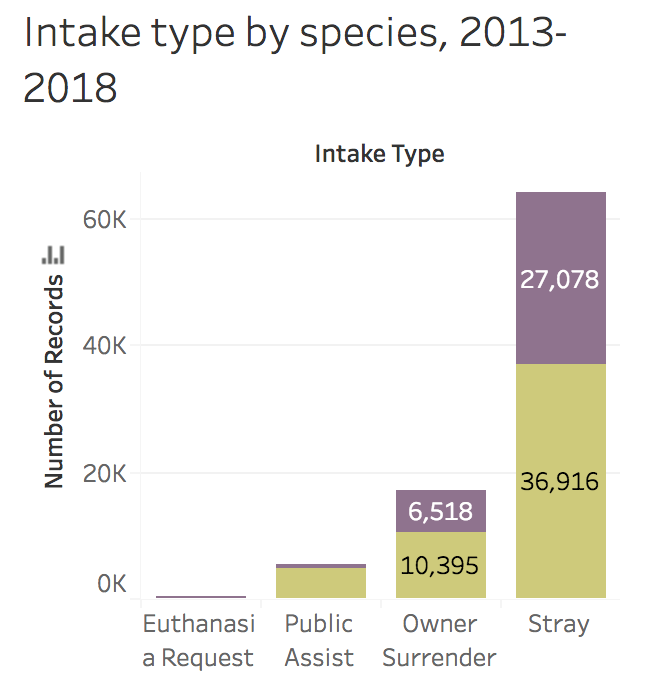
To help reduce stray intake, AAC shifted their focus to microchipping and keeping them up to date. They also help the civilians who find these pets in their communities. This can be seen through issuing found flyers that include information along with a picture of the animal to post in the neighborhood. Then the person who found the pet can contact AAC for further information before bringing the animal into the shelter.
“We want to keep animals where they were found,” Pet Resource Center team lead, Marisa Ledesma said. “That’s how they get back to their owner, a lot of times people don’t think about looking at the shelter when they live in Pflugerville or Far West Travis County, they never thought someone would drive 30 miles. Here is where [the intake shelter] is, this is where they are supposed to come.”
They also do their best to keep strays in their neighborhoods through grant-funded stray prevention. The neighborhood-level program is a newly formed team of employees working on community outreach to help reduce intakes through fencing programs, animal care education.
Since 2017, dog and cat intakes have gone down almost 13 percent.
Hilary Shurtleff, a pet resource specialist within the NLP, handles customer interaction, pet adoption and when in the field, she and her team deal with strays accordingly.
“Our connection with strays is trying to figure out why they're stray, why they're not being reclaimed and letting people know how to reclaim,” Shurtleff said. “We have flyers we put on doors, explaining what Animal Protection does and other services we provide. Last week, we had shelter vets visiting us from Seoul to educate themselves on our practices and how we're actually set up. There can always be improvements though.”
Last November, Austin resident Hana Adeni adopted her cat, Mr. Rogers from AAC. Mr. Rogers was a stray cat that was either hit by a car or involved in a fight with another animal, and AAC had to amputate his tail after intake at the shelter.
“It was so much easier than I thought it would be, Adeni said. “I went in there, just looking at dogs and cats, not expecting much and I walked away with Mr. Rogers that day.”
While the adoption process was easy, two nights after adopting Mr. Rogers, Adeni saw that he had tapeworm although AAC said he was worm free.
“I know conditions at shelters aren’t always the best they can be because of the sheer amount of animals they have to care for,” Adeni said. “It could happen at any shelter and I’d rather adopt than shop, now and in the future.
Austin Animal Center is the only intake facility in Travis County and often times people don’t know that. Within the past five years, AAC averages over 1,000 stray dog and cat intakes every month. A large portion of the addresses listed as the top intake locations are other shelters, like the Austin Humane Society, vet and pet emergency hospitals and Manor Rd.
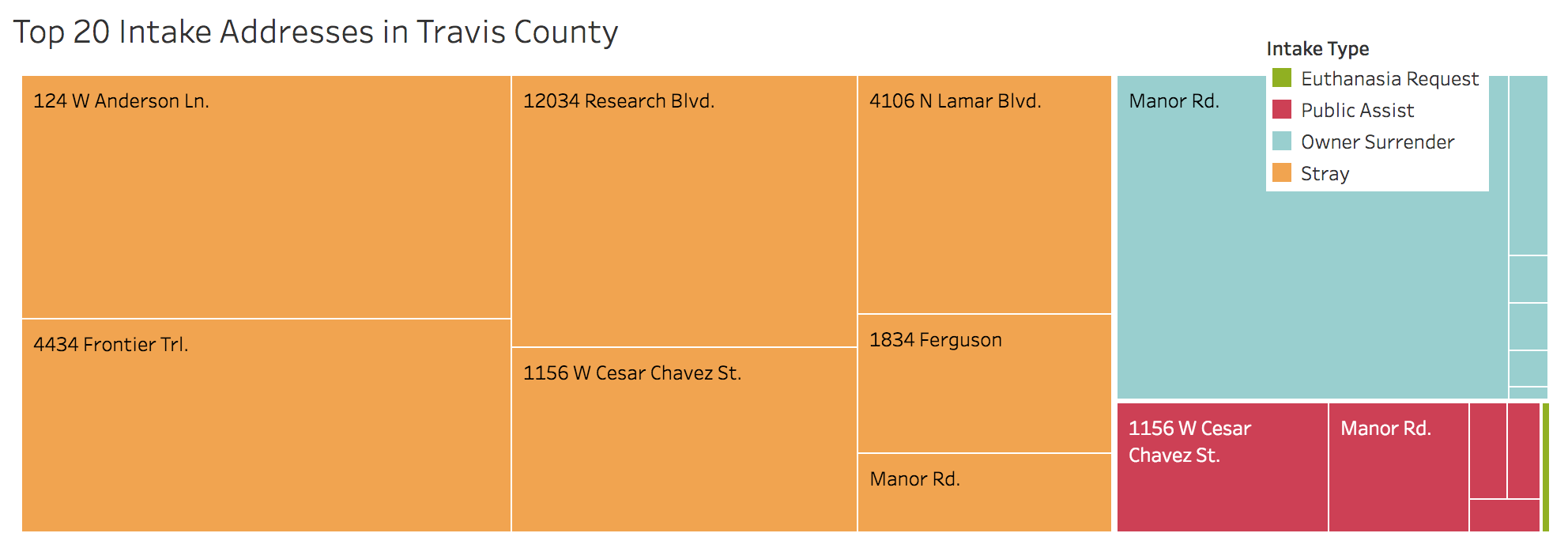
“We have three main zip codes, 78702, which is one of the fastest areas in the country being gentrified. So you have all these new post-grad, young professionals coming into the area and then you have the people that have lived there for twenty years,” Shurtleff said. “There’s also 78617 and 78653, which includes Manor Road, so a lot of outreach happens there.”
While strays are the majority intake type in Austin, when infections or disease is on the rise, they can often be put on the back burner to help sick animals. It’s difficult to compare the data between strays and sick intakes, as strays are considered a type and sick animals are considered a condition. Although, October did see a 61% in the sicks animals AAC cared for.
“There’s a level of priority, and typically strays are a the bottom of Animal Protection’s priorities because they need to deal with rabies quarantine and injuries and that includes wildlife,” Shurtleff said. “We do try to find strays when there’s time for them and that can take hours because dogs aren’t necessarily always in the same place, so we do hope the community helps out as much as possible.”
The high increase in intakes for October could be a result of Texas’ recent distemper outbreak. An infection that is spread like a cold through any wet substances from dogs including saliva, urine and mucus impact the way AAC runs its intake center.
“We have to be extra careful, so we’ve changed our intake process in the last 11 weeks because of that. We now require vaccines immediately, before they walk into the door, instead if walking dogs in and having them hang it in the front of the Pet Resource Center, there’s a table out front,” Shurtleff said. “We have a lot of people waiting in line, waiting in their cars, at least 10 feet apart. It’s best to keep dogs isolated a little more to ensure that they're not going to get sick or get other animals sick.”
Ledesma says there’s no typical day for Austin Animal Center, the shelter operates in the grey area while other parts of the city work in the black and white. She encourages everyone to be patient with the shelter and with other animal owners because everyone cares for their pets differently.
“Our main goal is to keep animals with their family, that’s the most important thing to us,” Ledesma said. “People can get frustrated when they call us with us because we try to offer solutions but we don't want your animal. We love animals, but we want your animal to stay with you because you love it and it loves you and we want that connection to be there.”